BaCKSTaGE PaSS
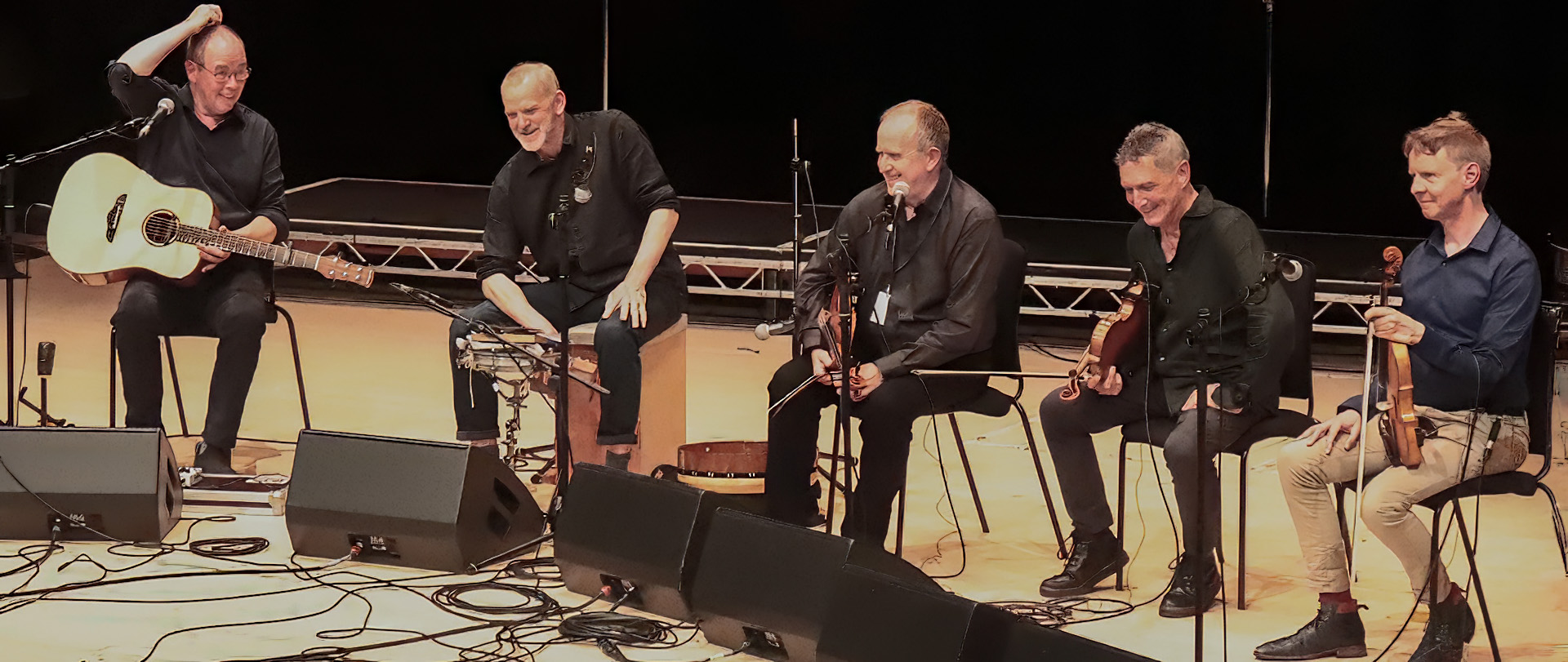
It is May 2026 at the Orkney Folk Festival. Between an afternoon set and headlining the closing session, some of Scotland’s finest traditional musicians sit around a cluttered kitchen table passing around takeout containers of chicken satay, black bean beef, spring rolls, spare ribs, and chips. There are no pre-rehearsed talking points and no posturing — just fast-moving banter coupled with deep mutual respect, and an invitation for me to lean into what makes one of the country’s most celebrated live bands tick. I can’t wait to ask some of my most burning questions…
Pre-Gig Rituals: Calm, Chilis, and 10,000 Steps
If you expect a high-energy backstage routine before Session A9 steps onto a festival stage, you won't find one here. There are no dramatic group huddles or back-slapping pep talks. "We try to stay calm," explains Brian. "We don't get too excited before we go on, because once you start playing some of these sets, they're quite intense and you kind of have to be calm, otherwise you can't control the tempos."
Instead, pre-show preparation is a mix of quiet focus, practical nerves, and a few peculiar individual habits. Brian describes his internal mental check: "Read the set list of each tune... just stare at the set list thinking, Right, I know what's happening there. Please let it be okay. Don't mess it up." Others admit to pacing the corridors to burn off nervous energy—getting their 10,000 steps in before the gig.
Often the fiddlers warm up with some tunes—much to the exasperation of the rhythm section. "The fiddle players tend to get together and play stuff, and that is really annoying for the rest of us," laughs David, "because we can't play anything before we go on, we just have to take our chances."
Charlie goads Marc into sharing one of his more ridiculous pre-show challenges from a past life. "So, we'd all order the garlic chili chicken. You pull all the chilies out of it and you put them in one side plate and you eat your meal. You have everything else. You pay the bill and you just leave them there. Then you wait until like 2 minutes before you’re to go on stage and you eat all the chilies and then you go try to sing."
The Creative Process
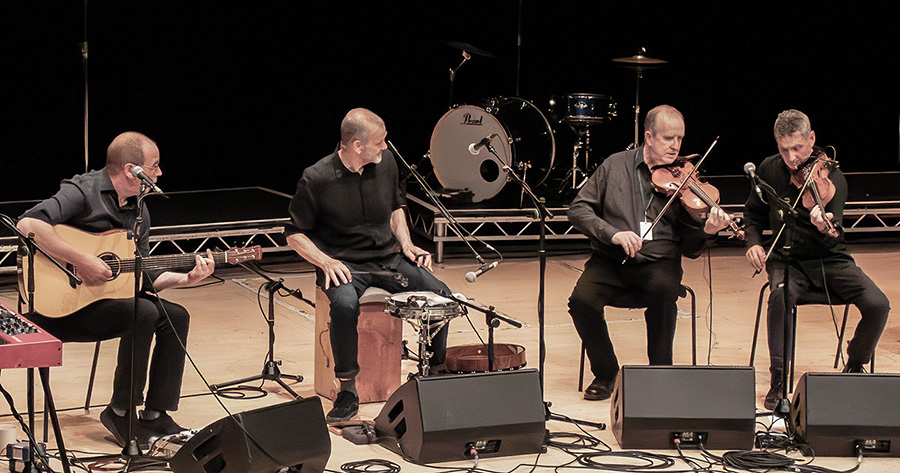
While Session A9 is unmistakably rooted in Scottish traditional music, their arrangements refuse to be boxed into a rigid genre formula. Pay close attention and you will hear a rich tapestry of unexpected musical influences underneath—from swing and jazz to samba and Brazilian rhythms. "We're not a stylistic band. We don't pick a style and then go for it, like 'this is going to be a heavy rock one' or 'this is going to be a bossa nova one.' Styles creep in naturally... they fit into supporting the four fiddles."
"We try to be as joyous as we can, because not all our lives are joyous at all points. So we try to always project joy and craic."
So if they’re not aiming for any particular style, how do they select music to record and perform? "We all present tunes for consideration. We experiment a lot," comments Charlie. The process relies on group consensus and creative retreats—such as a five-day session at Johnny Hardie’s house where they recorded 19 jams before deciding on the final set list for Magic Roundabout. David remembers, "We put the recorder on and just got into playing some music, and some bubbled up to the surface. Some we just prefer playing together."
Ultimately, it comes down to that one decisive test: whether playing the tune brings genuine joy to the musicians. Charlie sums it up, "We try to be as joyous as we can, because not all our lives are joyous at all points. So we try to always project joy and craic."
The Unmistakable Session A9 Sound
The sound of Session A9 is inimitable and unrivaled, a soaring, spontaneous wave of pure energy that just washes over the room. But creating that distinctive sound requires rigorous technical attention to detail, and a Session A9 pre-gig soundcheck is exacting and deliberate. Ross Couper, standing in for Kevin this day, gives high praise to the soundchecks, pointing out how meticulous they are, ensuring the sound output matches that quality they’re known for.
Brian explains the need for their nice monitors, "We all need to hear everybody, because we all make the noise, it’s a team effort. My favourite bits are when we're just making noise together, nobody’s trying to poke out or be a star, it’s just a noise we all contribute to. When that happens, when we hear what the audience hears, you have this wee treat where you're like, 'Wow, that's beautiful.' "
Equally crucial to their arrangements are the deliberate moments of silence—the sudden, breathtaking drops appearing in the middle of driving tunes. "When we’re all putting so much energy into it and it’s just flowing, it’s dead easy to make the magic. But do you know there's another beautiful bit in our music?" asks David, dwelling on the moments which can overpower him. "That's when we're not playing: the gaps, the stops, and the silence. And then we’re away again. It can be so powerful." Adam quips back, "Ah yes, it’s their favourite part that, when we’re not playing."
Stage Synergy and the Four Bar Rule
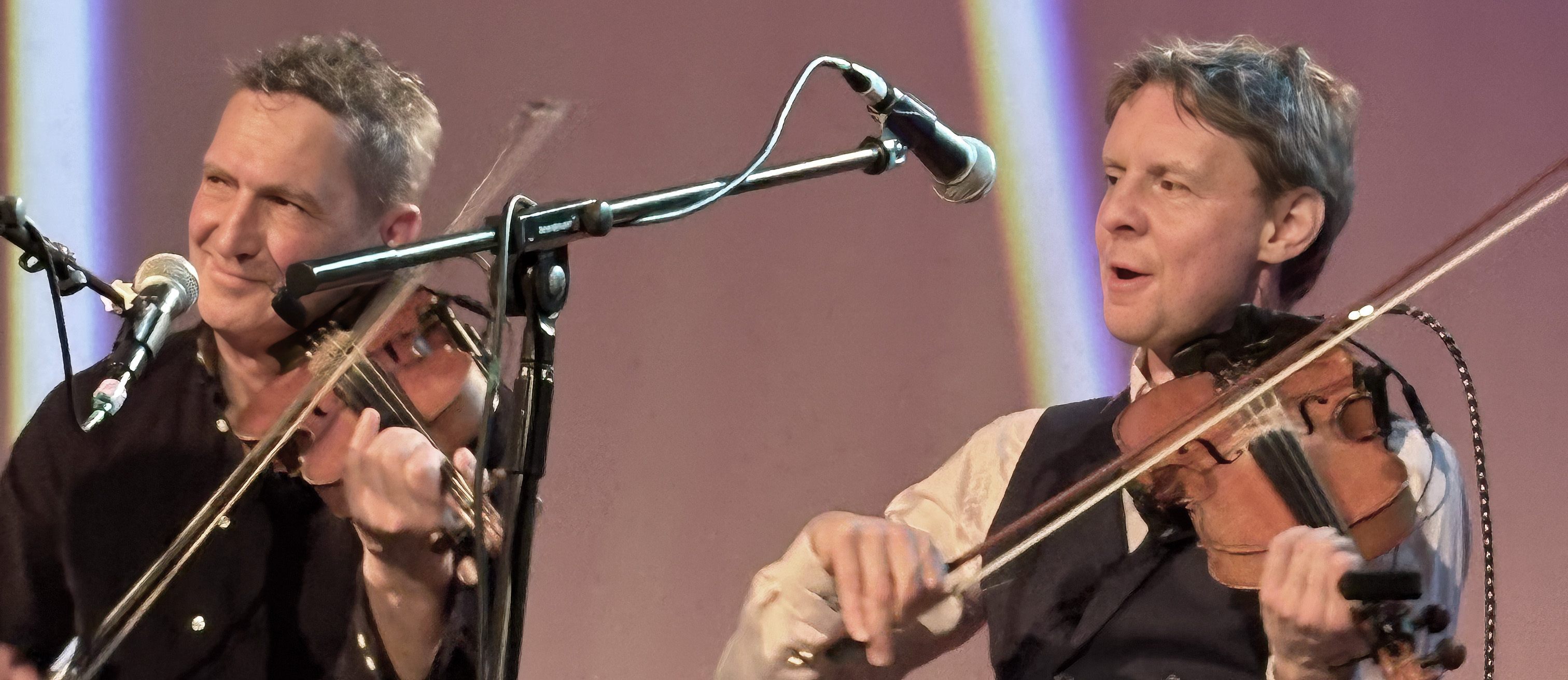
Experiencing Session A9 live, the audience immediately becomes aware it’s not a performance. There’s no choreography, no points where they have been taught to interact. The synergy on stage comes from them just having fun.
"I think we're a wee bit different from a lot of other bands," reflects Brian. "We play for each other. We want the audience to come on the journey, of course we do, but we know that if we play for each other, the audience comes along too. What we do is just be ourselves, and that gives room for the audience to come in towards us, into our world." This open and inviting journey must surely be one of the reasons that earned them the MG Alba ‘Live Act of the Year’ award in 2012.
Even mistakes are handled with legendary restraint, governed by the Four-Bar Rule. "If somebody makes a mistake, don't look at them directly straight away," explains Marc with a deadpan face. "Wait for four bars. Then just see if we're brave enough to do it again in exactly the same place!"
The Magic of the Live Performance
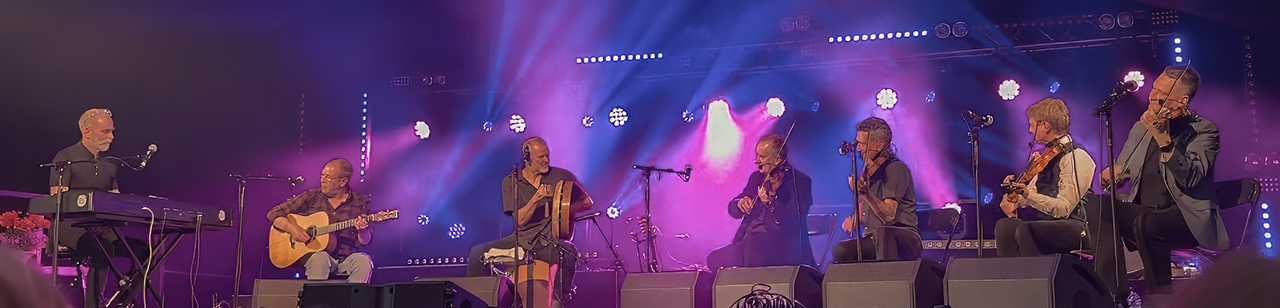
When everything aligns on stage—during sets like The Real Mackay Wedding or The Sleeping Tune —the technical execution falls away, leaving room for pure musical magic. Marc describes the phenomenon that every musician strives for: "You're no longer playing. You're listening and it's happening. For a musician, it's almost like you're hovering above it. You're not thinking about the mechanics or anything... you catch yourself in that moment. It's like trying to grab smoke. As soon as you try to grab it, it dissipates. You know, you can't control it. And as soon as you notice it, it's like a fairy in the corner of your eye, as soon as you turn to look at it, it's gone."
"For a musician, it's almost like you're hovering above it."
Festival attendees experience it too. A well-loved repeat band at Speyfest, upon finishing another performance that got the entire audience on their feet and dancing in the aisles, sound tech John Speirs approached Marc and told him, "It's pointless anybody else going on now, that's the festival there. No one's going to come close to that."
Ultimately, Session A9’s magic relies on genuine self-expression. As Ross summarised, echoing famed producer Rick Rubin: "Never, ever make music just for the audience. Do what you want, and if they like it, great." This is certainly the ethos of Session A9, they genuinely love making music together—and when they project their joy on stage, they take their audience on a magical journey.